
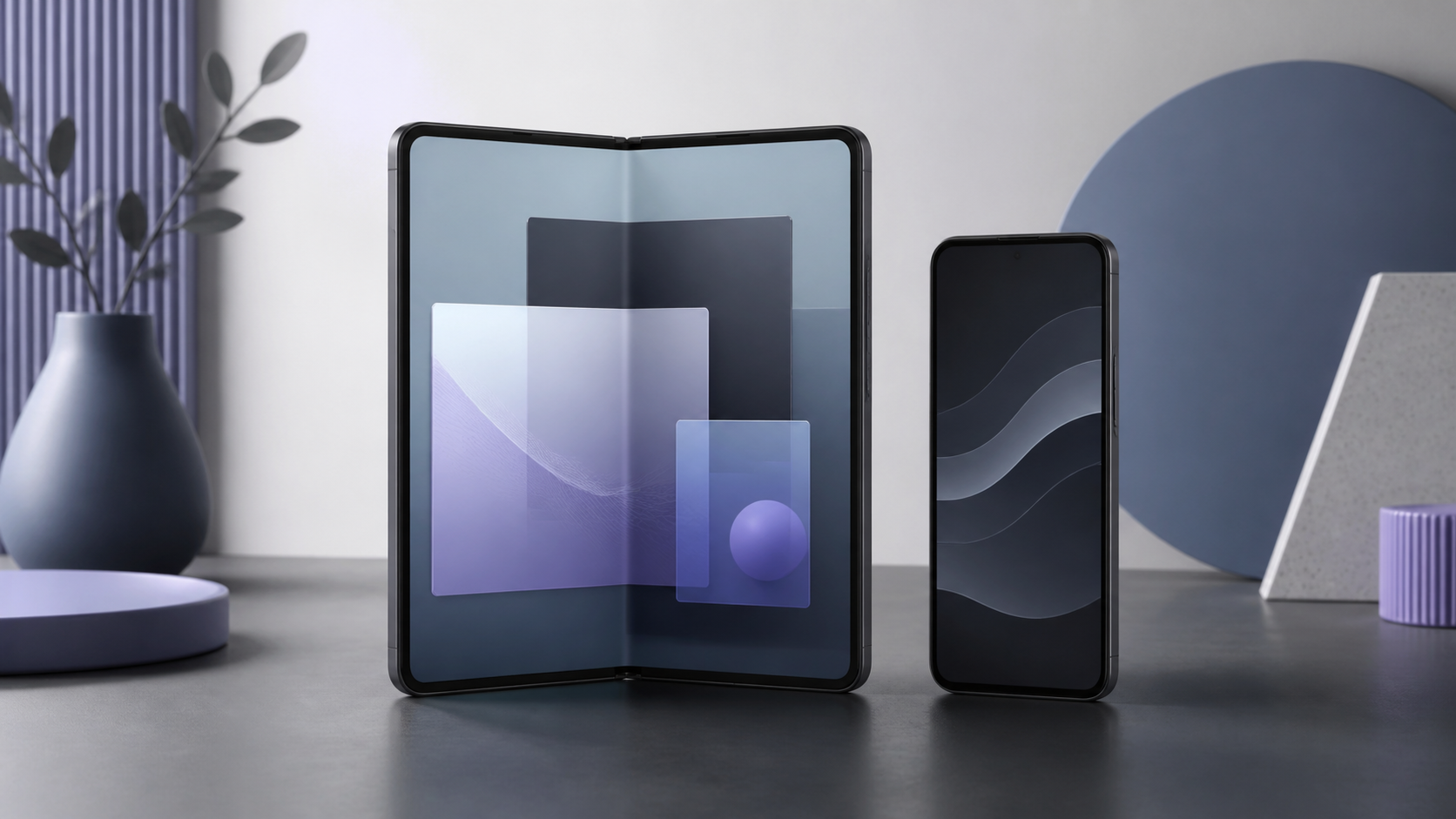
A Samsung Galaxy Z Fold8 Ultra review should begin with the uncomfortable question: what does the extra $200 buy over Samsung’s regular Galaxy Z Fold8? Both phones use the same named processor, offer the same storage tiers, support the same 45W wired charging rate, and carry the same IP48 rating. The Ultra earns its name through a larger workspace, a more complete camera system, and a slightly bigger battery—not through a universal advantage in every category.
Samsung lists the Fold8 Ultra from $2,099.99 in the United States, while the Fold8 starts at $1,899.99. That makes the Ultra premium roughly 10.5%. It also weighs 215g rather than 201g, an increase of 14g or about 7%. The right buyer will use the larger display and camera hardware often enough to accept both penalties.
Gearxis has not handled, photographed, benchmarked, or battery-tested either phone. This assessment uses Samsung’s official US launch information and specification table checked August 7, 2026. Camera quality, battery endurance, heat management, hinge feel, crease visibility, and long-term durability require independent testing and cannot be decided from specifications alone.
Samsung Galaxy Z Fold8 Ultra Review Verdict
Buy the Galaxy Z Fold8 Ultra if an 8-inch folding workspace will replace meaningful tablet time and you specifically want its 200MP main camera, 3x telephoto camera, or 5,000mAh battery. It is Samsung’s more complete foldable for productivity and content creation on paper.
Choose the regular Fold8 if you mainly want a foldable for reading, video, messaging, and lighter multitasking. It retains the same processor family, storage options, charging rate, and water-resistance rating while costing $200 less and weighing 14g less. Those are not small concessions when a device lives in your pocket every day.
Skip both if you rarely use split-screen apps, prefer a compact one-handed phone, or cannot identify a repeatable task that benefits from the inner display. A high price does not turn occasional novelty into daily utility.
Fold8 Ultra vs Fold8: What the Extra $200 Changes
| Decision point | Galaxy Z Fold8 Ultra | Galaxy Z Fold8 | Why it matters |
|---|---|---|---|
| Starting US price | $2,099.99 | $1,899.99 | Ultra costs $200 more, about 10.5% |
| Weight | 215g | 201g | Fold8 is 14g lighter |
| Main display | 8.0 inches, 2504 x 2256 | 7.6 inches, 1848 x 2448 | Ultra favors a larger work canvas |
| Cover display | 6.5 inches | 5.5 inches | Ultra offers a more conventional front-screen size |
| Main camera | 200MP | 50MP | Resolution alone does not prove image-quality superiority |
| Ultra-wide camera | 50MP | 50MP | Both list the same resolution |
| Telephoto camera | 10MP, 3x optical | None listed | Ultra is more flexible for distant framing |
| Typical battery | 5,000mAh | 4,800mAh | Ultra adds 200mAh, about 4.2% |
| Wired/wireless charging | 45W / 20W | 45W / 20W | No charging-rate advantage for Ultra |
| Processor | Snapdragon 8 Elite Gen 5 for Galaxy | Same | The model name does not establish an Ultra speed advantage |
| Water resistance | IP48 | IP48 | Neither gains a rating advantage |
The table exposes the central value question. Ultra does not charge faster, add a different processor, or improve the official ingress-protection rating. Its premium is concentrated in display size, camera flexibility, and battery capacity. If those three areas do not change your workflow, the regular Fold8 is the more disciplined purchase.
The Larger Screens Need a Real Job
The Fold8 Ultra opens to an 8.0-inch QXGA+ Dynamic AMOLED 2X display with a 2504 x 2256 resolution and an adaptive refresh range up to 120Hz. The 6.5-inch cover screen also runs up to 120Hz. Samsung positions the inner display as a workspace for multitasking, editing, and AI-assisted tasks.
The practical benefit is space, not merely diagonal size. A wider canvas can keep two apps visible, provide more room around a document, or make a timeline and preview easier to manage. Samsung also describes drag-and-drop support in Split view for moving files and other material between apps. Those advantages are meaningful only if your software and habits use them.
Before paying for Ultra, name three tasks you expect to perform on the inner display every week. Reviewing a document while referencing a message, sorting travel information beside a calendar, and making rough edits to photos or video are concrete answers. “It might be useful” is not.
The regular Fold8’s 7.6-inch main screen remains a large foldable canvas. Its smaller 5.5-inch cover display may be the more noticeable compromise, especially for frequent front-screen typing. Buyers should compare the two sizes in person because published dimensions cannot determine comfort, reach, or preferred app scaling.
Camera Hardware Is the Clearest Ultra Upgrade
Samsung gives the Fold8 Ultra a 200MP wide camera, a 50MP ultra-wide camera, and a 10MP telephoto camera with 3x optical zoom. The Fold8 lists two 50MP rear cameras—wide and ultra-wide—and no dedicated telephoto lens in Samsung’s comparison table.
That makes the camera system the least ambiguous hardware reason to choose Ultra. The telephoto lens provides an optical option for tighter framing, and Samsung also lists up to 30x digital zoom for the Ultra versus 10x digital zoom on Fold8. The 200MP mode supports HDR, while Samsung promotes improved low-light processing and 8K recording through its APV codec.
These are capabilities, not Gearxis test results. Megapixels do not by themselves prove better detail, color, autofocus, motion handling, or low-light output. The stronger buying case is versatility: Ultra includes three distinct rear focal-length roles, while Fold8 omits the telephoto camera. If you rarely zoom or edit high-resolution files, that flexibility may not return its cost.
Battery Capacity Improves, Charging Does Not
Fold8 Ultra has a typical 5,000mAh dual battery; Fold8 has 4,800mAh. The 200mAh difference is about 4.2%. Samsung claims the Ultra can reach up to 67% in around 30 minutes and the Fold8 up to 63% under its internal test conditions, using a separately sold 45W adapter and suitable USB-C cable.
Do not translate a 4.2% capacity increase into a guaranteed 4.2% runtime gain. Screen size, brightness, radios, cameras, software, temperature, and workload all affect endurance. Both models support 45W wired and 20W wireless charging, so Ultra does not buy a higher maximum charging tier.
The larger battery is best treated as support for the larger display and camera ambitions, not proof that Ultra will always last longer. Buyers who rely on all-day unfolded-screen work should wait for controlled battery comparisons or purchase from a seller with a suitable return policy.
“Ultra” Still Carries Foldable Compromises
At 215g, Fold8 Ultra is not unusually heavy compared with every premium phone, but it is heavier than the regular Fold8 and concentrates that mass in a folding body. Samsung lists it at 8.9mm thick when folded and 4.1mm when unfolded. A case will add more size and weight.
The IP48 rating needs context. Samsung describes freshwater resistance under controlled conditions for up to 30 minutes at 1.5 meters and warns that resistance can diminish with wear. The “4” dust digit means the device is not represented as dust-tight. Beach, pool, workshop, and fine-particle environments deserve more caution than the simple phrase “water resistant” suggests.
Repair costs and long-term hinge or inner-screen durability also matter at this price, yet this article has no evidence for a long-term verdict. Review Samsung Care+ terms, carrier insurance, deductibles, and local repair access before buying. A $2,099.99 phone changes the value of protection planning.
The Gearxis $200 Upgrade Test
Give the Ultra one point for each statement that is true:
- You will use the 8-inch inner display for multi-window work or editing several times per week.
- You regularly use a dedicated telephoto camera or need the 200MP capture option.
- The 6.5-inch cover screen is materially easier for your daily typing and navigation than Fold8’s 5.5-inch cover screen.
- A 200mAh battery increase matters more to you than carrying 14g less.
At three or four points, Fold8 Ultra has a coherent purpose. At one or two, compare both phones in person and consider whether one feature alone is worth $200. At zero, buy Fold8 if you still want a foldable—or reconsider whether a foldable is solving a real problem.
This rule deliberately does not award points for the processor, storage tiers, charging rate, or IP rating because Samsung lists those core attributes equally. It keeps the decision focused on differences rather than repeating features shared by both devices.
Owners building a broader Samsung setup may also want Gearxis’s AirPods Pro 3 vs Galaxy Buds4 Pro comparison, which explains how phone-specific features affect an accessory purchase.
The Galaxy Z Fold8 Ultra is not “not quite Ultra” because its upgrades are insignificant. Its camera system and larger displays are substantial on paper. The limitation is value: several foundational specifications remain the same as Fold8, so the higher price rewards a narrow set of buyers rather than everyone seeking Samsung’s newest foldable.
Choose it when you can name the larger canvas and camera functions that will earn their place in your week. Otherwise, the lighter and less expensive Fold8 preserves most of the foldable experience with fewer costs attached.